
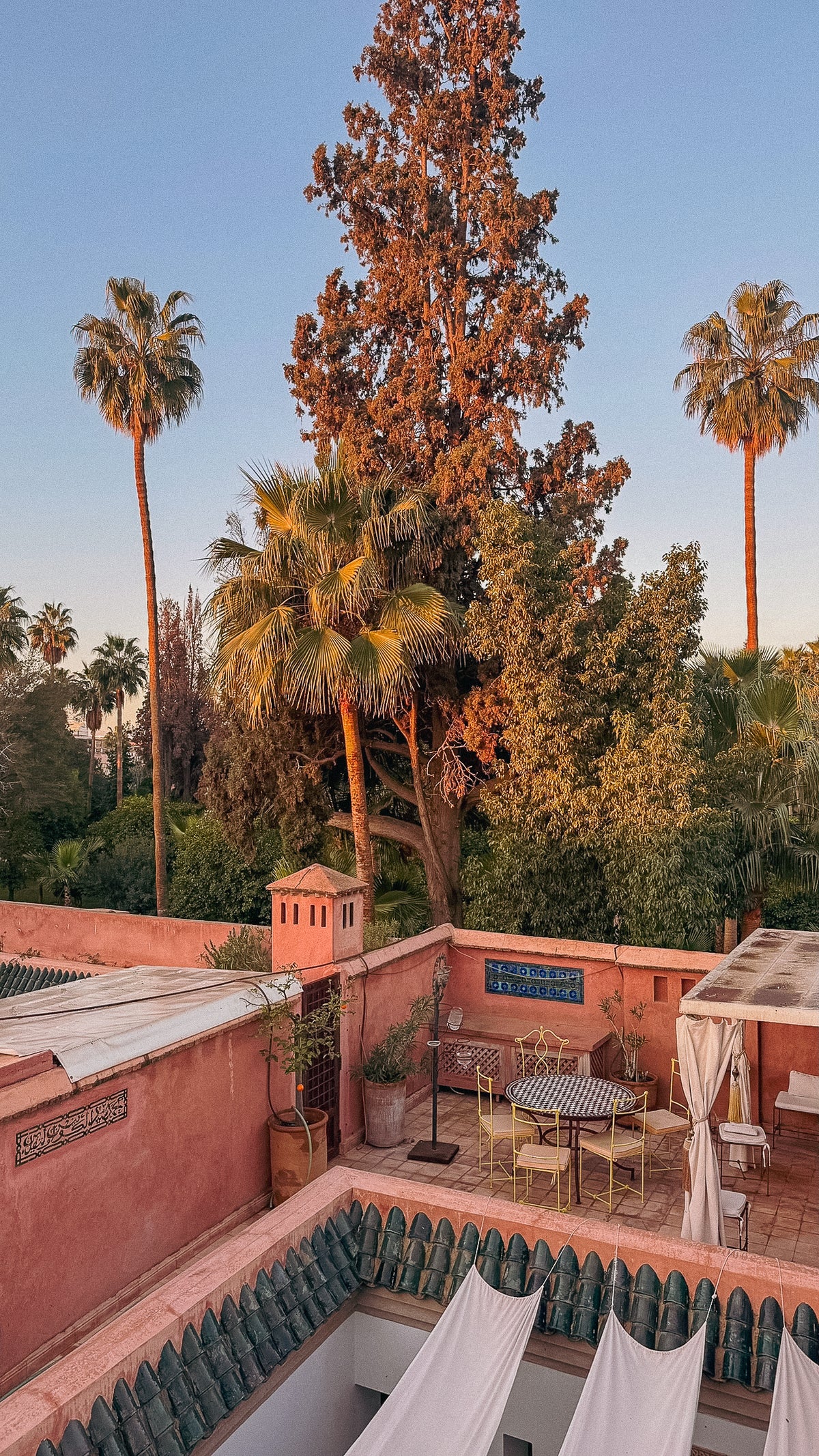
Friday couscous: why Moroccans eat it, and where to share one in Marrakech
Von der Familie Maison Estran

Friday couscous in Morocco: why it is eaten on Fridays, what goes into a couscous of seven vegetables, how to eat it at a Moroccan table, why UNESCO lists it as heritage shared by four countries, and where to eat a good one on a Friday in Marrakech.
On a Friday in Marrakech, a little after midday, the city changes rhythm. The call to the Friday prayer rings out over the medina, the lanes empty, some shutters come down, and in thousands of kitchens a pot that has been simmering since the morning is nearly ready. Lunch on Friday, in Morocco, means couscous.
It is the most ordinary dish in the country and, on that day, the most important. This is a short guide to it: the word, the dish, the manners, and where you can share one if you are not lucky enough to be invited home.
Why couscous on Friday
Friday is the day of the main weekly prayer, at midday. Traditionally, families gather after it around one large platter of couscous, and many households still make it the anchor of the week: the meal that brings everyone back to the same table, whatever else has happened. A recent piece in Morocco World News describes it as the week's "non-negotiable anchor", while noting that work, school and families living far apart have moved lunch later in some homes, or to the evening.
The custom is as social as it is religious. Older relatives usually oversee the cooking, younger ones fetch bread and carry plates, and most recipes are passed on by watching rather than written down.
Seven vegetables and the steam
The best-known Friday couscous is the couscous of seven vegetables. The list changes with the season and the family, but a typical one, as Culture Trip gives it, is aubergine, courgette, carrot, parsnip, pumpkin, tomato and a little cabbage, often with chickpeas and with meat or chicken cooked in the broth.

What makes it couscous, though, is the grain and the steam. The semolina is cooked in the top half of a two-tier pot, the couscoussier, set over the simmering vegetables and meat, so that it takes on their flavour as it swells. It is taken out several times, worked by hand with a little olive oil to separate the grains, and put back to steam again. The result is light and separate, never sticky, and nothing like the instant kind.
At the table, the grain is heaped in a wide dish, the meat goes in the middle, the vegetables are arranged around and over it like the spokes of a wheel, and the broth often comes separately, for each person to add as they like. Some families finish it with tfaya, a sweet topping of onions slowly caramelised with raisins and cinnamon.
Hands or spoon: how to eat couscous at a Moroccan table
If you are invited to a Moroccan home on a Friday, a few gestures will make you a better guest.
- Wash your hands before the meal. In many homes a jug and basin are brought to the table.
- Eat from the part of the dish in front of you. Each person has their section of the platter; reaching across it is a small rudeness that children are taught early to avoid.
- Use your right hand if you eat with your fingers. The traditional way is to gather a little couscous with the fingertips, roll it lightly into a ball and lift it to your mouth. It takes practice. Nobody will mind if you ask for a spoon, and you will usually be offered one anyway.
- Wait to be served the best pieces. The host will often push meat and vegetables towards a guest; let them, and do not go hunting for the last piece of meat yourself.
- Bread is a tool as much as food, and it is never wasted.
- Say thank you to the cook, by name if you know it. On a Friday, they will have been at it since the morning.
A dish shared by four countries: couscous and UNESCO
In December 2020, UNESCO inscribed the knowledge, know-how and practices pertaining to the production and consumption of couscous on its Representative List of the Intangible Cultural Heritage of Humanity. The nomination was made jointly by Algeria, Mauritania, Morocco and Tunisia, which UNESCO welcomed as an example of international cooperation.
The listing is about more than a recipe. It covers the whole chain: growing the cereal, grinding it into semolina, rolling it by hand, steaming it, the clay and wooden utensils made by potters and family workshops, and the meals at which it is shared. The knowledge, UNESCO notes, is passed on mostly at home, by watching and copying. Which is to say: by being in the kitchen on a Friday morning.
Where to eat couscous on a Friday in Marrakech
Many restaurants put couscous on the menu on Fridays only, and some small ones cook only as much as they expect to sell, so book or arrive early.
Amal, in Gueliz, is a social enterprise that has trained women as cooks in its restaurant since 2013, and everything you spend there goes back into the training. Friday is its busiest day by far: the trainees serve two to three times as many guests as on other days. Corner of Rue Allal Ben Ahmed and Rue Ibn Sina. Lunch, Monday to Saturday, 12:00 to 15:30, closed on Sundays. Book for a Friday.
Jajjah, the café of the artist Hassan Hajjaj in the design quarter of Sidi Ghanem, serves the couscous of the day every Friday from midday, cooked in a kitchen you can see from the tables. It is a good way to end a morning in the showrooms (see our guide to design shopping beyond the souks). 114 to 116 Rue Sidi Ghanem. Book ahead.
Closer to the house, the cafés and restaurants of the medina are in our Dar el Bacha address book. On a Friday, ask the day before whether couscous is on.
Couscous at Dar Estran
Breakfast at Dar Estran will always be included. Dinner is a different matter, and we are not promising anything yet: if all goes to plan, there will one day be a small table d'hôte at the house, with very few seats. If there is, you will read about it here first.
Until then, the best Friday couscous in Marrakech is the one you are invited to share. If someone asks you, say yes.
Quick answers
Why do Moroccans eat couscous on Fridays? Friday is the day of the main weekly prayer, at midday, and families traditionally gather afterwards to share a large dish of couscous.
What is couscous with seven vegetables? The classic Friday couscous: steamed semolina served with vegetables such as carrot, parsnip, courgette, pumpkin, aubergine, cabbage and tomato, usually with chickpeas and often meat.
How do you eat couscous in Morocco? From the shared dish, from the section in front of you, with a spoon or with the right hand, rolling a little couscous into a ball with your fingertips.
Is couscous on the UNESCO list? Yes. In 2020 UNESCO inscribed the knowledge and practices of couscous on its intangible heritage list, on a joint nomination by Algeria, Mauritania, Morocco and Tunisia.
For the rest of the week in the medina, see Marrakech in winter; for the words of the Marrakech house, Dar or riad?; for the day you arrive, from the airport to the medina; and for everything else worth eating in the city, from tanjia to snail soup, our Marrakech food guide.
Dar Estran, our house at the end of a quiet derb in Dar el Bacha, is opening soon: eight bedrooms around two patios, against the gardens of the royal palace, to book one at a time or all together, with breakfast included. Join the list on the Dar Estran page to be the first to know.
The Maison Estran Family
The house
Dar Estran, Dar el Bacha, Marrakech. Eight bedrooms around two patios, against the gardens of the royal palace. Opening soon. Be the first to know.