
A Day in Cagliari: From the Castello Ramparts to a Lunch in the Marina
Par la famille Maison Estran

There comes a point in every beach week (usually around the fourth day, when the sand has worked its way into everything and even the children have had their fill of the sea) when the right move is not another cove but a city. And southern Sardinia is quietly fortunate here, because under an hour from the coast sits one of the Mediterranean’s most likeable capitals: Cagliari, a city stacked up its own limestone hill, crowned by a walled citadel, looking out over a lagoon full of flamingos to the sea. It is not a museum-town preserved for visitors; it is a real, working, lived-in place, which is exactly why a day here is the perfect counterpoint to the beach: proof that you came to Sardinia for an island, not just a shoreline.
This is a day mapped the way the city itself is built: from the top down. Cagliari rewards the walker who climbs to the Castello, the medieval citadel on the summit, for the ramparts and the view, and then drifts down through the old quarters to the Marina, the tight grid of streets behind the port where lunch is waiting. Up for the history and the horizon, down for the seafood and the shade. It is about thirty-five to forty minutes from the house near Pula (an easy morning drive) and it is a day that suits every age and every weather, in any season of the year. Here is how to spend it.
Morning: up to the Castello
The climb, and the easiest way to make it
Cagliari’s old heart is the Castello, the citadel the Pisans raised in the thirteenth century on the very top of the hill, its pale walls visible from everywhere in the city and half the coast beyond. You can walk up through the steep lanes (the atmospheric way, and not far) or, on a hot day or with tired legs, take one of the public lifts that carry you up the hillside and spare you the gradient. Either way, aim to be up top in the cooler morning, before the midday sun turns the limestone to a griddle; the light is kinder then, and the views are at their clearest.
The Bastione di Saint Remy: the great terrace
Begin where the city does its showing-off. The Bastione di Saint Remy is Cagliari’s monumental rampart-terrace, a grand construction of white limestone, built at the turn of the twentieth century and grafted onto the old Spanish walls, and its upper promenade (the Umberto I terrace) is the finest free view in the city: the whole of Cagliari falling away in tiers of ochre and pastel to the port, the lagoon, and the sea, with the mountains behind. It is the city’s living room, where locals come for the passeggiata and the sunset, and it costs nothing to stand there and take in the lot. Give it time; this single vantage explains the whole geography of the place better than any map.
The cathedral, the towers, and a great museum
From the Bastione, the Castello’s lanes open into a small dense world of monuments. The Cattedrale di Santa Maria, Cagliari’s cathedral, hides a lavish interior behind a neo-Romanesque façade: a Pisan foundation much remade over the centuries, with a remarkable carved pulpit and a crypt worth the few steps down. A short walk away stand the two great Pisan towers of 1300s Cagliari: the Torre dell’Elefante, named for the small marble elephant on its flank, and the Torre di San Pancrazio, both opened to visitors in recent years for another sweep of rooftop views (check current opening hours, which vary).
And if the family contains anyone at all curious about the deep past, do not miss the National Archaeological Museum in the Cittadella dei Musei at the top of Castello. It holds the treasures of Sardinia’s mysterious pre-Roman civilisation (the enigmatic Nuragic bronze figurines, tiny warriors and archers and mothers cast three thousand years ago, and the towering stone Giants of Mont’e Prama) as well as the Nora Stone, the sandstone slab bearing the oldest written mention of the name “Sardinia,” carried here from the ruins near Pula. For anyone who has walked the site at Nora, seeing the stone itself closes a satisfying loop. Children, in our experience, find the little bronze warriors far more gripping than any number of grand paintings; this is the rare museum that holds every age.
Midday: down to the Marina, and lunch
The descent
When the morning’s fill of history is complete, walk down off the hill toward the water. The route drifts through the old working quarters (Villanova and Stampace with their tiny churches and washing-strung lanes, or the direct way down past the Bastione) and delivers you into the Marina, the quarter that lies between the Castello and the port. This is where the day changes key: from monuments and views to a warren of narrow streets, tucked-away churches, small shops and, above all, restaurants.
Where to eat: the Marina, and the market
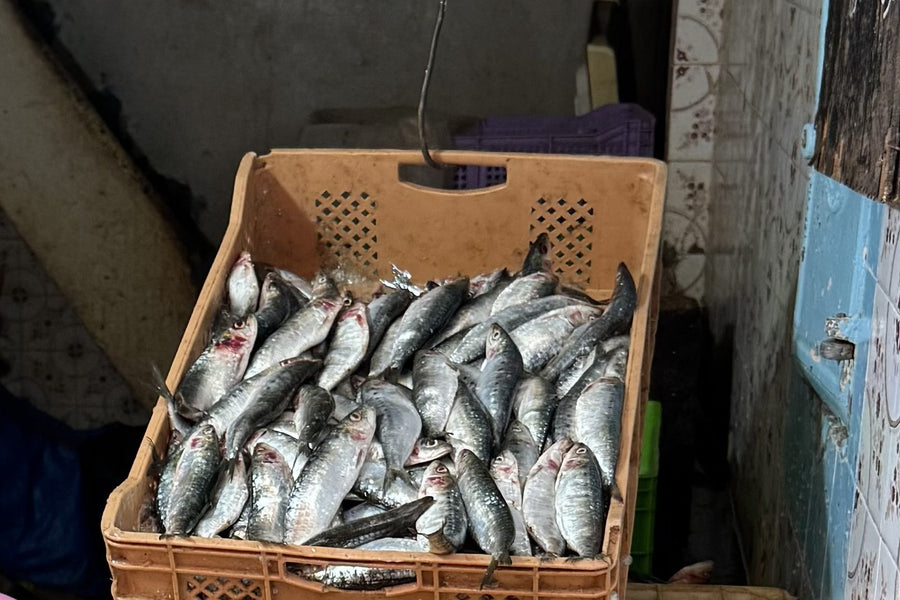
The Marina is Cagliari’s dining heart, a dense grid of trattorias and osterias behind the porticoed waterfront of Via Roma, and it is exactly where to have the long lunch a morning of walking has earned. This is seafood country at its most direct: look for fregola with clams (the toasted Sardinian semolina pearls in a garlicky broth), spaghetti ai ricci (with sea urchin, in season), a fritto misto of the day’s catch, or the island’s bottarga grated over pasta. Drink a cold Vermentino, take your time, and let the afternoon heat pass while you eat: the civilised local rhythm.
For the very best current tables (from Amanõ, the city’s new Michelin star, to its good-value Bib Gourmand) see our companion guide to eating around the south; the Marina rewards both the planned reservation and the happy accident of a good-looking trattoria with a handwritten menu. And for a different kind of food theatre, the Mercato di San Benedetto, all fish and produce, is a morning worth building in if markets thrill you: while its historic building is rebuilt, the market trades from a temporary hall in Piazza Nazzari (go early; it winds down by early afternoon).
Afternoon: a gentler second act
After lunch, Cagliari asks nothing strenuous of you, and the afternoon has three easy shapes depending on the company and the weather.
For the curious: Roman Cagliari
The city’s Roman Amphitheatre, cut into the hillside in the second century, is the great monument of ancient Karalis. An honest note: access has been limited for years while the monument is cleaned up and restored, and the city has been working on walkways that bring visitors closer to its heart. It is worth a look for the enthusiast, but check the current status before making a special trip. Nearby, the shaded Orto Botanico (botanical garden) is a cool, green retreat with tropical glasshouses and Roman cisterns: an inspired choice on a hot afternoon, and a hit with children.
For the pilgrim (and the view): Bonaria
On the hill east of the centre stands the Basilica di Nostra Signora di Bonaria, the sanctuary that gave its name (so the story goes) to Buenos Aires, and a place of deep significance to Sardinians. The complex, its older Gothic church and the grander basilica beside it, rewards the short trip with quiet, art, and another commanding view over the gulf.
For everyone: the sea, again
And because this is still Sardinia, the most Cagliaritano way to end a city day is to return to the water. Poetto, the city’s own beach, runs for kilometres of pale sand along the eastern edge of town beneath the Sella del Diavolo headland: a proper urban beach where the whole city swims, with kiosks and bars for a late-afternoon dip and an aperitivo as the light softens. To spend the morning three thousand years in the past and the evening in the sea, all within one city, is a very Sardinian pleasure.
Practical notes for the day
A few things worth knowing. Go for the morning up top, the afternoon down low: the Castello is a sun-trap by midday, so do the ramparts and the towers early and save the shaded Marina, the market and lunch for the heat of the day. Wear proper shoes; the old town is steep and cobbled, and the public lifts help but don’t cover everything. Check opening hours and days before you set out: museums and monuments in Cagliari often close on Mondays or shift to seasonal hours, and the amphitheatre’s access is restricted during restoration. A car is easy (the drive from the coast is well under an hour) but park at the base of the hill and go up on foot or by lift rather than trying to drive into the Castello’s lanes. And the city is genuinely year-round: out of the beach season, a mild winter or spring day in Cagliari, with the monuments quiet and the trattorias full of locals, is one of the loveliest ways to see it.
This is where a coastal base an easy drive away proves its quiet worth. A morning in the capital and back to the terrace by the evening, or a long day finished with a swim at Poetto on the way home: the city becomes a chapter of the week rather than a separate trip, close enough to fold into a holiday built around the sea. Our concierge, available on request, can point you to the day’s open museums, book the lunch table, and tell you which market morning is worth the early start. For a group, it is one of the week’s great shared days: see how to plan a group stay at Il Polpo Nero. And if the market sends you home with fish, our red mullet on the plancha is the recipe.
The last word
The best beach holidays are the ones with at least one great city day folded into them: the day that reminds you a place has a mind as well as a shoreline. Cagliari is that day for the Sardinian south: a walkable, liveable, deeply characterful capital where you can stand on a rampart over the whole gulf in the morning, meet a three-thousand-year-old bronze warrior before lunch, eat the sea in a Marina trattoria in the afternoon, and swim off a city beach as the sun goes down. It answers the only real objection to a week on the sand (what else is there?) with a shrug and a smile and a whole city. Give it a day. It gives back more. See how Cagliari fits into a full family week in southern Sardinia.
Frequently asked questions
What are the best things to do in Cagliari in one day?
Spend the morning in the Castello, the hilltop citadel: the Bastione di Saint Remy for the free panoramic view, the Cattedrale di Santa Maria, the two Pisan towers (Torre dell’Elefante and Torre di San Pancrazio) for more views, and the National Archaeological Museum for the Nuragic bronzes and the Giants of Mont’e Prama. Then walk down to the Marina quarter for a long seafood lunch, and, if you like, end at Poetto beach for a late swim.
How far is Cagliari from the Pula coast?
About 35–40 minutes by car from the Pula area: an easy morning’s drive, which makes a day in the capital a simple addition to a beach week. Park at the base of the Castello hill and go up on foot or by public lift rather than driving into the old town.
Is the Roman Amphitheatre of Cagliari open to visit?
Partly. Access has been limited for years while the monument is restored, and the city has been opening walkways towards its centre. Check the current status with the city before making a special trip.
What is the Bastione di Saint Remy?
It’s Cagliari’s grand monumental terrace and rampart in the Castello quarter: a white-limestone construction whose upper promenade offers the finest free view in the city, over the rooftops to the port, lagoon and sea. It’s the city’s favourite gathering spot and costs nothing to visit; go in the morning or at sunset.
Where should I eat lunch in Cagliari?
The Marina quarter, the grid of streets behind the port, is the city’s dining heart: full of seafood trattorias serving fregola with clams, spaghetti ai ricci, fritto misto and bottarga. See our companion restaurants guide for named recommendations, and go early to the San Benedetto market, now in a temporary hall in Piazza Nazzari while its historic building is rebuilt, if food markets thrill you.
Is Cagliari worth visiting with children?
Yes. The ramparts and towers give a castle-and-view adventure, the National Archaeological Museum’s little Nuragic bronze warriors are surprisingly gripping for kids, the botanical garden is a cool green break, and Poetto beach lets you end the day in the sea. Keep the walking to the cooler morning and reward it with gelato. See the full family week guide for more ideas around the south.
When is the best time to visit Cagliari?
Cagliari is a year-round city. Spring and autumn are ideal: warm, uncrowded, the monuments quiet; summer is hot, so start early and keep to the shade at midday; and a mild winter day, with trattorias full of locals, is a quietly lovely time to see it without the beach-season crowds.